
How to Choose a Bedroom Humidifier You Can Keep Clean
A humidifier can make a dry bedroom feel more comfortable, but the model with the largest tank or longest advertised runtime is not automatically the sensible choice. Water sits inside the appliance, mineral deposits collect on surfaces, and an oversized unit can add moisture faster than the room needs. Choose the machine you can fill, empty, reach, and clean—and confirm that the room is actually dry before buying one.
The EPA recommends keeping indoor relative humidity below 50 percent and reducing humidifier use if moisture condenses on windows, walls, or nearby surfaces. A practical comfort range is often 30 to 50 percent, but climate, building conditions, and individual needs differ.
Measure the room before choosing a machine
Use a separate hygrometer for several days, checking morning and evening. Do not rely only on dry skin or a scratchy throat; those symptoms have many possible causes. Note whether heating is running, a bedroom door is open, and condensation appears on glass.
If humidity already sits near the upper end of the recommended range, a humidifier may create a moisture problem instead of solving one. Air leaks, excessive heat, poor ventilation, or a medical issue may require a different response.
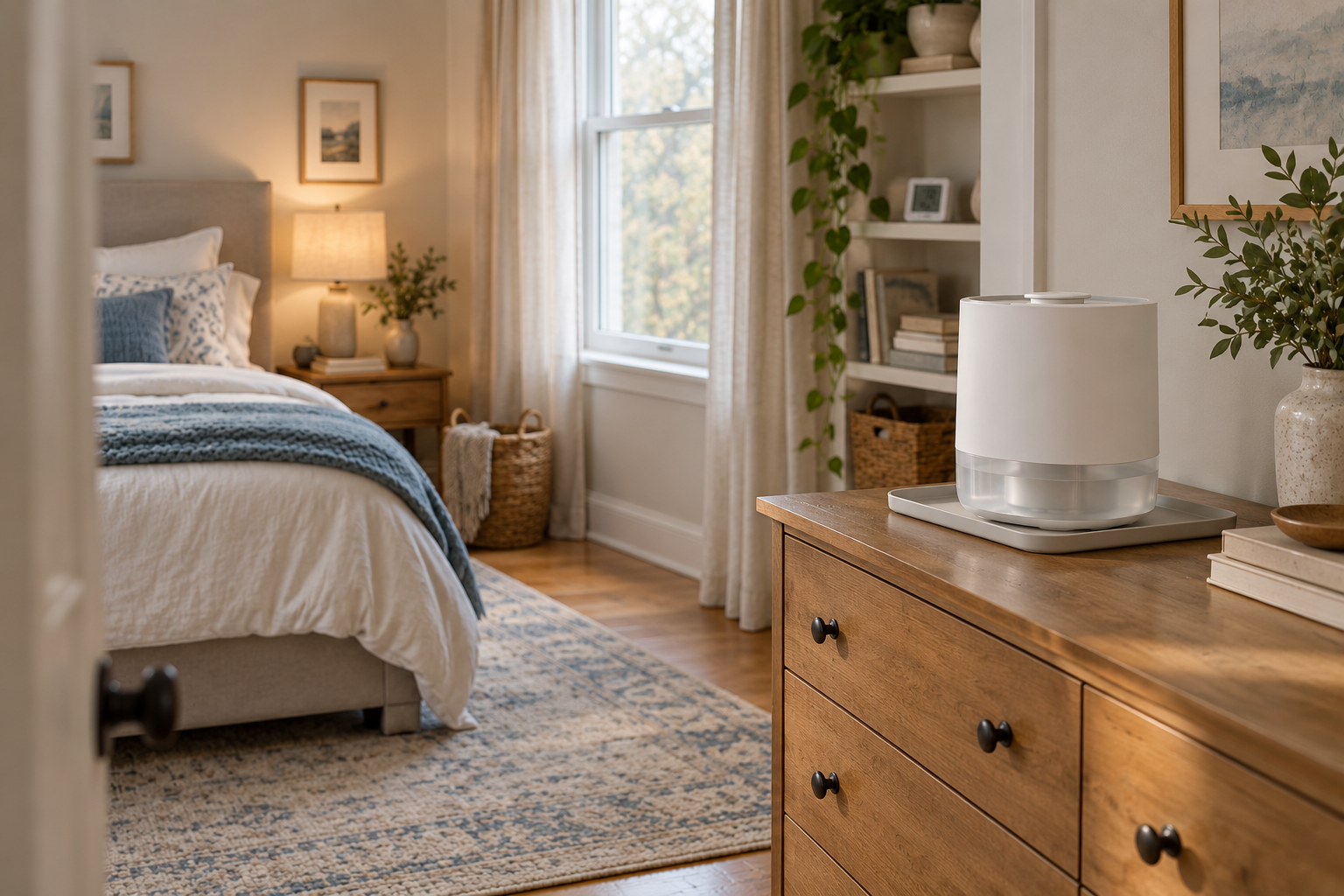
Measure the room’s floor area and the surface where the machine will stand. Leave clearance around the mist outlet and keep the unit away from bedding, electronics, finished wood, and a wall that becomes damp. Place it on a water-resistant, level surface where a spill can be handled.
Choose for cleaning access, not tank size alone
Before buying, examine product photos, the manual, and replacement-part information. Ask:
- Can your hand or a soft cleaning tool reach the tank’s interior corners?
- Does the base have narrow channels where water remains?
- Can the tank stand open to dry completely?
- Is the mist tube removable?
- Does the manufacturer give specific descaling and disinfecting instructions?
- Will you realistically carry the full tank from the sink to the bedroom?
A six-liter tank reduces refill frequency but is heavier when full and holds more water that must be managed. A smaller tank may be more appropriate for a small bedroom or for someone who prefers daily refilling.
Understand ultrasonic humidifier tradeoffs
Ultrasonic humidifiers create a fine mist without boiling water. They are often quiet and energy-efficient, but minerals in tap water can be dispersed as “white dust” and can accumulate inside the machine. Manufacturer instructions may recommend distilled or purified water, especially where tap water is hard. Do not add essential oils unless the model explicitly has a compatible aroma component; oils can damage ordinary water tanks and introduce substances not intended for airborne mist.
The Levoit Classic 300S Smart Ultrasonic Humidifier has a 6-liter top-fill tank, three manual mist settings plus Auto mode, app controls, and a manufacturer-stated coverage area of up to 505 square feet. Top filling reduces the need to invert a wet tank, while app controls can help someone monitor and adjust a routine without handling the unit at night.
Those features do not make it maintenance-free. The coverage figure is not a reason to run the machine continuously in a smaller room, and its built-in reading may differ from humidity elsewhere in the bedroom. A separate hygrometer placed away from the mist gives a useful comparison.
Build the cleaning routine before the purchase
Use the manual for the exact model, because removable parts and permitted cleaning agents differ. A workable routine generally includes:
Every day it is used
- Unplug the unit before handling it.
- Empty the remaining water, wipe accessible surfaces dry, and refill with fresh water recommended by the manufacturer.
Every third day—and whenever the manual requires more
EPA guidance says to clean portable humidifiers every third day: unplug the unit, empty the tank, scrub away scale, deposits, or film, and wipe surfaces dry. Follow the manufacturer whenever it calls for more frequent care. Descale and disinfect only with the products and dilution specified in the manual. Never mix bleach with vinegar, ammonia, or another cleaner. Rinse thoroughly so cleaning residue is not sent into the room. Replace filters or other consumable parts on condition and according to instructions—not merely because an arbitrary date arrived.
The Classic 300S includes aroma pads. If fragrance is used, place only a compatible oil on the designated aroma pad as directed; never pour oil into the water tank or base.
If the unit develops persistent odor, visible film, discoloration that does not clean away, damaged components, or mist that leaves surrounding surfaces wet, stop using it until the cause is resolved.
Match the purchase to the person and room
The Classic 300S is a reasonable candidate for someone who wants a large top-fill tank, cool mist, remote controls, and enough space to position the unit correctly. A smaller manual model may be easier to carry and clean in a compact bedroom. If a hygrometer shows normal humidity, buying no humidifier is the better decision.
Before ordering, download the manual and imagine performing the complete cleaning routine at your sink. If the tank will not fit, the unit is too heavy when full, or the interior surfaces look inaccessible, choose another design. A humidifier contributes only when its moisture level and cleanliness can be controlled over time.